
Self-Retraction as Redemption
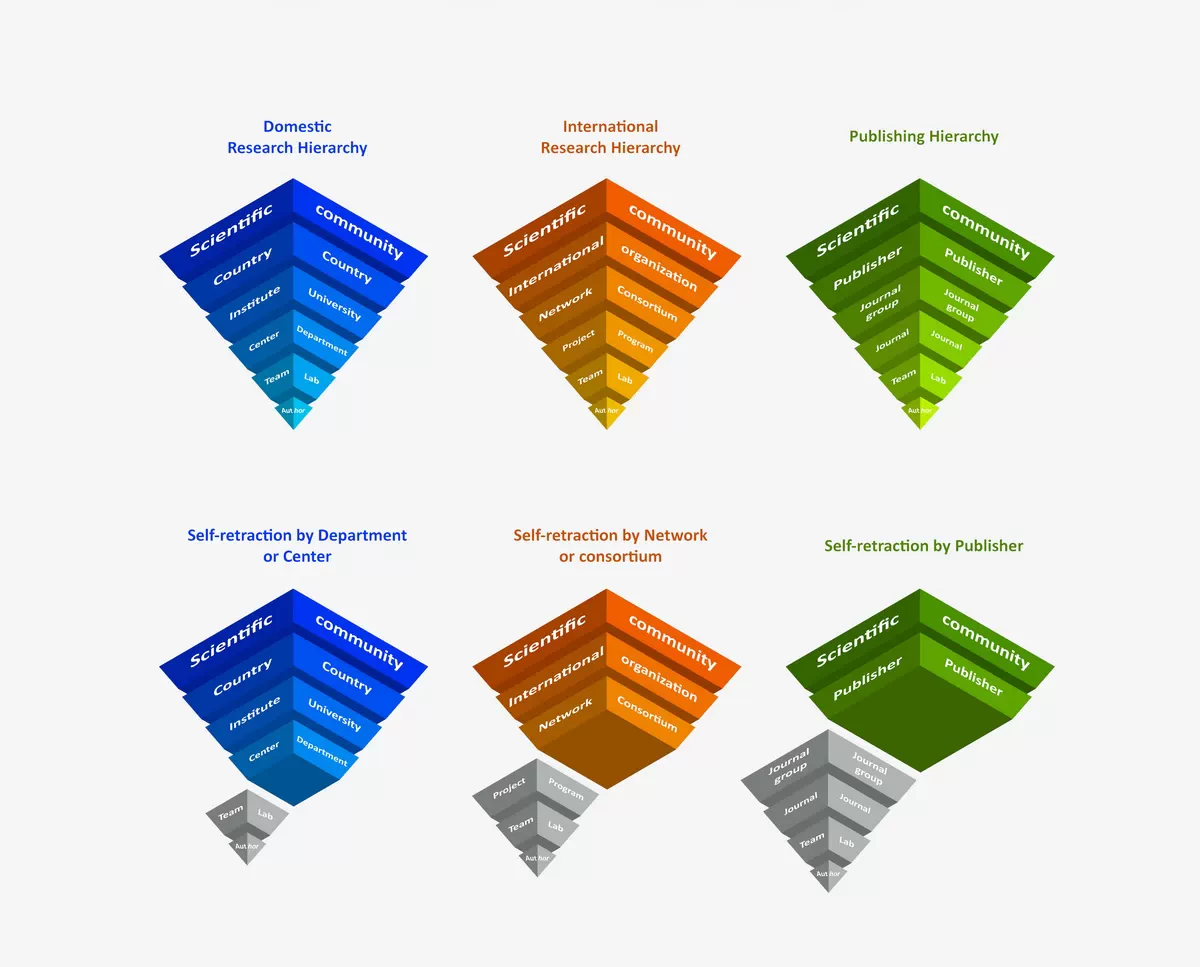
Introducing the Hierarchical Self-Retraction Forgiveness (HSRF) Model
Introducing the Hierarchical Self-Retraction Forgiveness (HSRF) Model
A conceptual proposal introducing the Hierarchical Self-Retraction Forgiveness (HSRF) model. The idea emerged from observations documented in Lesson One , where resistance to scientific correction often appeared to be driven not only by disputes over evidence, but also by fears that admitting error could damage the reputation of authors, institutions, journals, and other actors within the scientific system. HSRF explores whether voluntary self-retraction, combined with structured forgiveness and transparency, can reduce these barriers and make scientific correction easier, earlier, and less adversarial.
While the scientific community traditionally responds to misconduct through penalties, the potential for encouraging self-retraction by waiving such punishments is less explored. The HSRF model addresses this by providing a hierarchical framework to enable authors and their supporting institutions to retract publications voluntarily without fear of social or institutional penalties.
Robust safeguards prevent misuse of the mechanism. The model emphasizes transparency, honesty, and cooperation while granting forgiveness to repentant authors and the intermediate layers of the scientific system that assist in retraction. By fostering self-correction and reducing systemic barriers, HSRF aims to enhance the integrity of the scientific record.
For full details, the original publication is available at Accountability in Research, 2025.
The Hierarchical Self-Retraction Forgiveness (HSRF) model explores a fundamental question: Can scientific correction be strengthened by encouraging voluntary admission, transparency, and self-retraction rather than relying exclusively on punishment?
The model addresses several key questions:
Forgiveness survives only as long as complete honesty survives.
Forgiveness applies only after formal retraction.
HSRF addresses deliberate misconduct, not honest error.
Violations of HSRF conditions revoke forgiveness.
Industrialized fraud is ineligible for forgiveness.
Retractions remain permanently visible and documented.
Forgiveness never suspends investigation.
Forgiveness does not eliminate legitimate claims by others.
HSRF applies only to future retractions.
Fraudulent forgiveness can itself be revoked.
Excluded stakeholders may request later inclusion.
Potential conflicts must be openly disclosed.
A proposed mechanism that rewards earlier cooperation in correction and retraction.
The author or layer voluntarily submits a detailed self-retraction request. The Forgiveness Authority evaluates, investigates if necessary, makes a decision, announces publicly, and archives the record.
When a third party reports potential misconduct, the Authority evaluates the claim, engages relevant layers, reviews their responses, and decides whether to grant forgiveness.
If subsequent evidence shows violations of HSRF principles, the Authority can revoke previously granted forgiveness, notify affected layers, and update the records accordingly.
The HSRF model ensures both efficiency and integrity, balancing encouragement of self-retraction with safeguards against abuse.
Haghshenas, A. (2026). Self-retraction as redemption: Forgiveness for repentant authors. Accountability in Research, 33(2). https://doi.org/10.1080/08989621.2025.2471513